
Chores might not be the most thrilling topic, but they’re a secret weapon for teaching kids responsibility and life skills. Imagine a world where kids actually fight over who gets to take out the trash or wash the dishes. Sounds like a fantasy, right? But with age-appropriate chores, that dream can become a reality.
Understanding Age Appropriate Chores
Age appropriate chores offer children opportunities to learn responsibility and develop essential life skills. Assigning tasks that match a child’s developmental stage fosters independence and improves self-esteem.
Benefits of Assigning Chores
Assigning chores promotes a sense of accomplishment. Children gain confidence as they complete tasks. Responsibility develops through ownership of their chores, leading to improved time management skills. Children learn teamwork and collaboration when they work with family members. These experiences enhance a child’s ability to contribute to household tasks. Furthermore, establishing a routine with chores can create a structured environment, making children feel secure.
Impact on Child Development
Chores positively influence various aspects of child development. Engagement in household tasks equips children with essential skills for future independence. Problem-solving abilities improve as children encounter challenges while completing chores. Social skills benefit from collaborating on tasks with family members or peers. Self-discipline also develops through regular chores, enhancing focus and perseverance. Ultimately, children who participate in chores become more prepared for adulthood by acquiring life skills that are vital for their future success.
Age By Age Guide
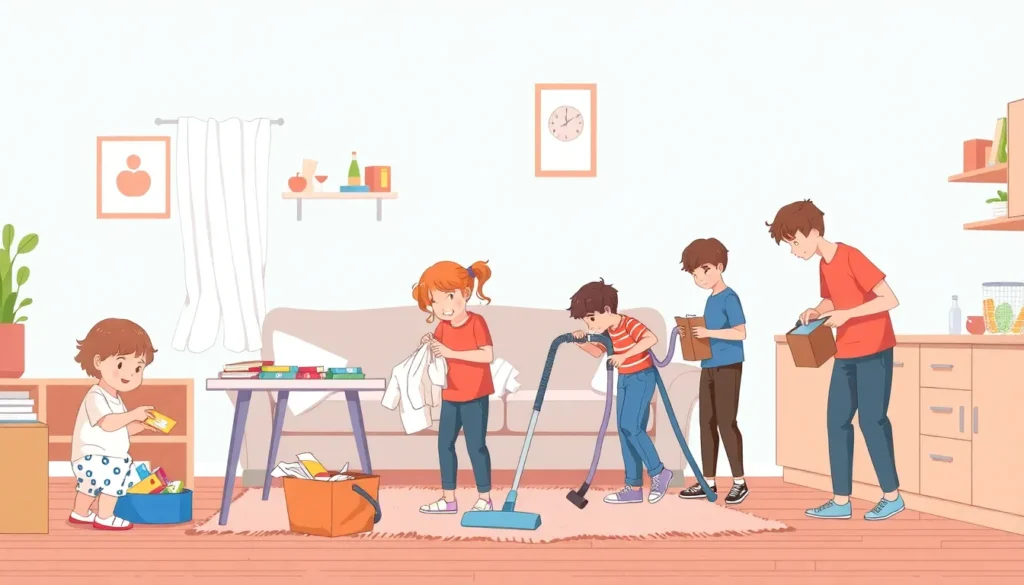
Chores can be effectively introduced at any age. The right tasks help children build skills and confidence.
Toddlers (Ages 2-4)
Children aged 2 to 4 can manage simple tasks. Putting away toys promotes responsibility. Watering plants introduces them to caring for living things. Helping with laundry, such as sorting socks, provides early lessons in organization. These small chores set a foundation for future responsibilities.
Preschoolers (Ages 4-5)
At ages 4 to 5, kids enjoy more engaging chores. They can help prepare easy snacks like fruit or sandwiches. Dusting low furniture teaches them about cleanliness. Putting away dishes, under supervision, fosters independence. Engaging in these tasks encourages a sense of contribution to family life.
Early Elementary (Ages 6-8)
Children between 6 and 8 can take on more responsibility. They should pack their own lunches. Sweeping floors allows them to learn household upkeep. Sorting and folding laundry further develops organizational skills. Completing these chores reinforces self-sufficiency and boosts confidence.
Middle Childhood (Ages 9-12)
From ages 9 to 12, chores become more varied and complex. Vacuuming and making their beds promote accountability. Preparing simple meals introduces basic cooking skills. They can start managing their own schedule, ensuring chores get done. Taking ownership of these responsibilities prepares them for future independence.
Teenagers (Ages 13+)
Teenagers aged 13 and older can manage significant household tasks. Responsibilities like grocery shopping and meal planning teach budgeting skills. Managing their own laundry promotes personal responsibility. They can also assist with yard work or cleaning common areas. Engaging in these tasks enhances their preparation for adult life.
Tips for Implementing Chores
Implementing age-appropriate chores requires careful planning and consistency. Clear guidelines can help children understand their responsibilities.
Setting Expectations
Setting clear expectations streamlines the chore process. Children should know what tasks they are responsible for and the desired outcomes. Outlining these tasks promotes accountability. Communicate specific details like frequency and timeframes for completion. For instance, ask a child to clean their room every Saturday morning. Providing visual reminders such as checklists can reinforce expectations. Simplifying tasks into manageable steps ensures children remain engaged and feel capable of success.
Encouraging Responsibility
Encouraging responsibility involves positive reinforcement and acknowledgment. When children complete chores, praise their efforts to boost self-esteem. Offering small rewards for consistent participation can motivate them further. Assigning age-appropriate tasks encourages independence and decision-making skills. For example, a seven-year-old could choose between setting the table or sorting laundry. Engaging children in discussions about household needs cultivates a sense of ownership and pride in their contributions. This approach fosters intrinsic motivation and leads to lasting habits.
Common Challenges and Solutions
Children often face challenges when it comes to doing chores. Addressing these obstacles fosters a more positive experience and encourages responsibility.
Resistance to Chores
Resistance to chores is a common issue. Some children may see chores as tedious or uninteresting. Parents can mitigate this by involving children in the decision-making process. Allowing kids to choose their tasks enhances their motivation. When chores feel like a choice rather than an obligation, children are more likely to engage. Using timers also transforms chores into fun challenges; kids might race against the clock. Including them in family discussions about the importance of chores can foster understanding. Highlighting the benefits of completion boosts pride in their contributions.
Balancing Chores with Schoolwork
Balancing chores with schoolwork requires careful planning. As children juggle assignments, extracurriculars, and household tasks, it becomes crucial to prioritize time effectively. Setting a consistent schedule aids in managing responsibilities. Creating a daily or weekly chart provides visual accountability. Older children can learn to time-block chores around their study sessions. Breaks can be incorporated into chore time, allowing for a refresh before tackling homework. Parents should ensure a supportive environment by discussing workloads. Together, they can find a healthy balance that promotes responsibility without overwhelming them.
Age-appropriate chores play a crucial role in a child’s development. By engaging in household tasks, children not only learn responsibility but also gain valuable life skills that prepare them for the future. When chores are tailored to a child’s age and abilities, they can foster independence and boost self-esteem.
Creating a structured environment where children contribute to the household can enhance their sense of accomplishment and teamwork. With the right approach, chores can transform from a mundane task into an opportunity for growth and learning. Ultimately, embracing chores as a family can lead to stronger bonds and a more harmonious home.

